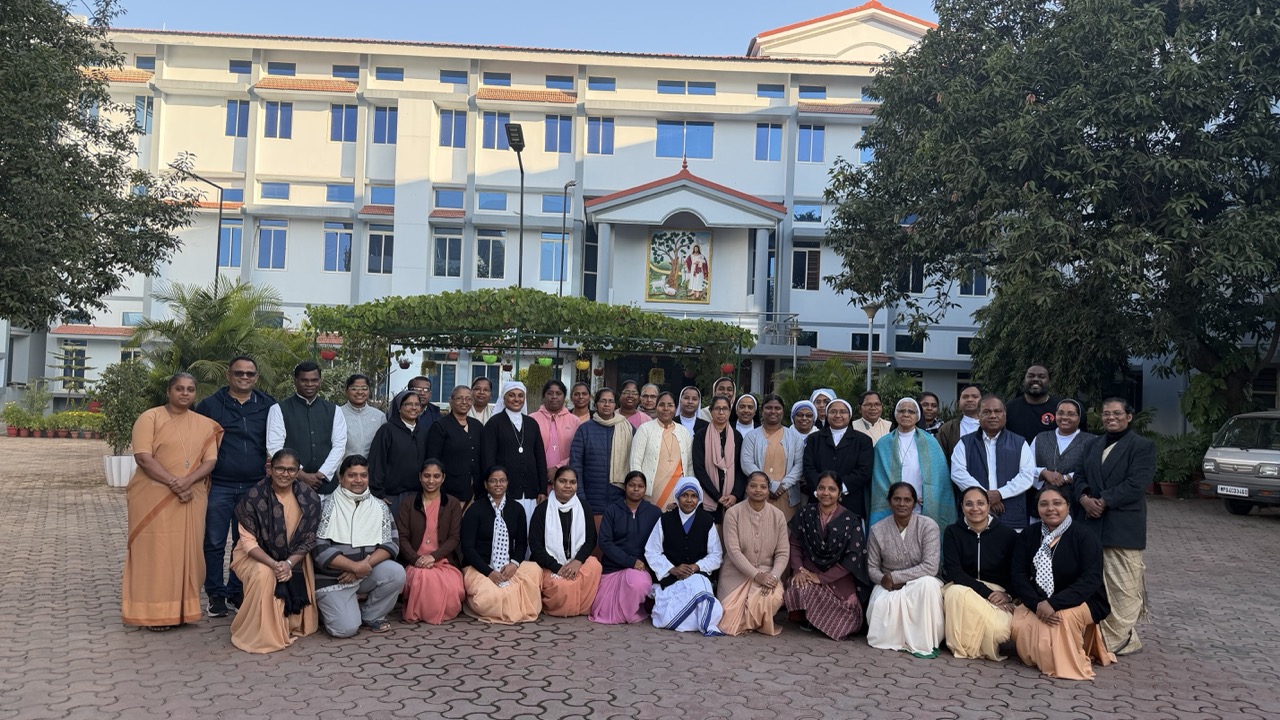
The Conference of Religious Women India (CRWI) organised a five-day Training of Trainers (ToT) on Safeguarding at the Pastoral Centre, Bhopal, bringing together 43 participants from different congregations and CRI regions, including Madhya Pradesh, Chhattisgarh, North, West, and URU regions. This intensive programme was not merely a training in procedures and policies, but a deeply formative journey that invited participants to encounter safeguarding as a core dimension of the Church’s mission.
Safeguarding: A Gospel Imperative
The training was conceived in response to the growing pastoral, moral, and institutional responsibility of the Church to protect the dignity and well-being of minors, women, and vulnerable adults. From the very first day, participants were invited to reflect on safeguarding as flowing directly from the Gospel itself—rooted in God’s preferential love for the vulnerable and the Church’s call to be a safe and life-giving space for all.
Introducing CRWI’s safeguarding vision and initiatives, the sessions highlighted the collective responsibility of religious congregations and institutions. Particular reference was made to CRWI’s study “It’s High Time,” which sheds light on experiences of abuse and vulnerability within religious life and underscores the urgency of addressing these realities with honesty and courage.
A Holistic and Participatory Learning Process
The ToT followed an integrated and participatory methodology that engaged participants intellectually, emotionally, pastorally, and spiritually. Expert-led inputs were complemented by group discussions, creative exercises, case studies, film screenings, and region-wise action planning. Each day concluded with spiritual conversations, offering participants a sacred space to process difficult realities, integrate learning, and attend to their own emotional and spiritual responses.
This holistic approach ensured that safeguarding was not reduced to compliance alone, but embraced as a deeply human, relational, and faith-filled commitment.
Deepening Awareness: Abuse, Culture, and Prevention
Over the course of the programme, participants explored various forms of abuse and their psychological, spiritual, and social impact. Special attention was given to understanding power dynamics, trust, consent, and grooming behaviours. Cultural influences on sexuality, gender roles, and silence were critically examined, helping participants recognise how abuse is often hidden and normalised within families, institutions, and communities.
Through the framework of the Five Rs of Safeguarding—Recognise, Respond, Report, Record, and Refer—participants gained clarity on their roles and responsibilities when confronted with concerns or disclosures of abuse.
Legal, Canonical, and Institutional Responsibility
A significant component of the training focused on civil and canonical obligations. Detailed inputs were provided on the POCSO Act (2012) and the POSH Act (2013), enabling participants to understand reporting procedures, documentation requirements, and institutional accountability.
Sessions on Canon Law addressed delicts against human dignity, reporting obligations, and the Church’s call to justice, correction, and reparation. Participants also engaged deeply with the role of the Grievance Redressal Cell (GRC) of CRWI, recognising it as a vital and safe platform for religious women and men to raise concerns without fear.
Formation, Media, and Lived Realities
The training did not shy away from complex and sensitive realities such as intra-familial abuse, sexual internet addiction, and the impact of media on formation and relationships. Drawing parallels between family life and religious life, participants reflected on the importance of healthy formation processes, accompaniment, and integration—especially for children, formees, and young religious.
Film screenings such as Spotlight and Precious offered powerful moments of collective reflection, confronting participants with the devastating consequences of silence while reaffirming the necessity of early intervention and compassionate response.
Building Capacity for the Future
A key outcome of the ToT was the formation of regional safeguarding trainer teams, equipped to conduct awareness programmes, support policy development, and foster a culture of prevention within their regions and congregations. Participants worked collaboratively to design safeguarding sessions for various target groups, including children, parents, educators, formees, and CRI units.
The programme concluded with evaluation, action planning, and a meaningful ritual of passing on the light of safeguarding, symbolising the shared commitment to carry this mission forward.
Way Forward
CRWI remains committed to strengthening safeguarding efforts through continued mentoring, refresher trainings, and resource development. Collaboration with CRI regions and congregations will be deepened to ensure that safeguarding policies are not only formulated but lived out in practice.
The Safeguarding ToT in Bhopal was a transformative journey—one that reaffirmed that safeguarding is not an isolated initiative, but an ongoing process of conversion. It calls the Church to listen, to act justly, and to create communities where every person, especially the most vulnerable, can live with dignity, safety, and hope.